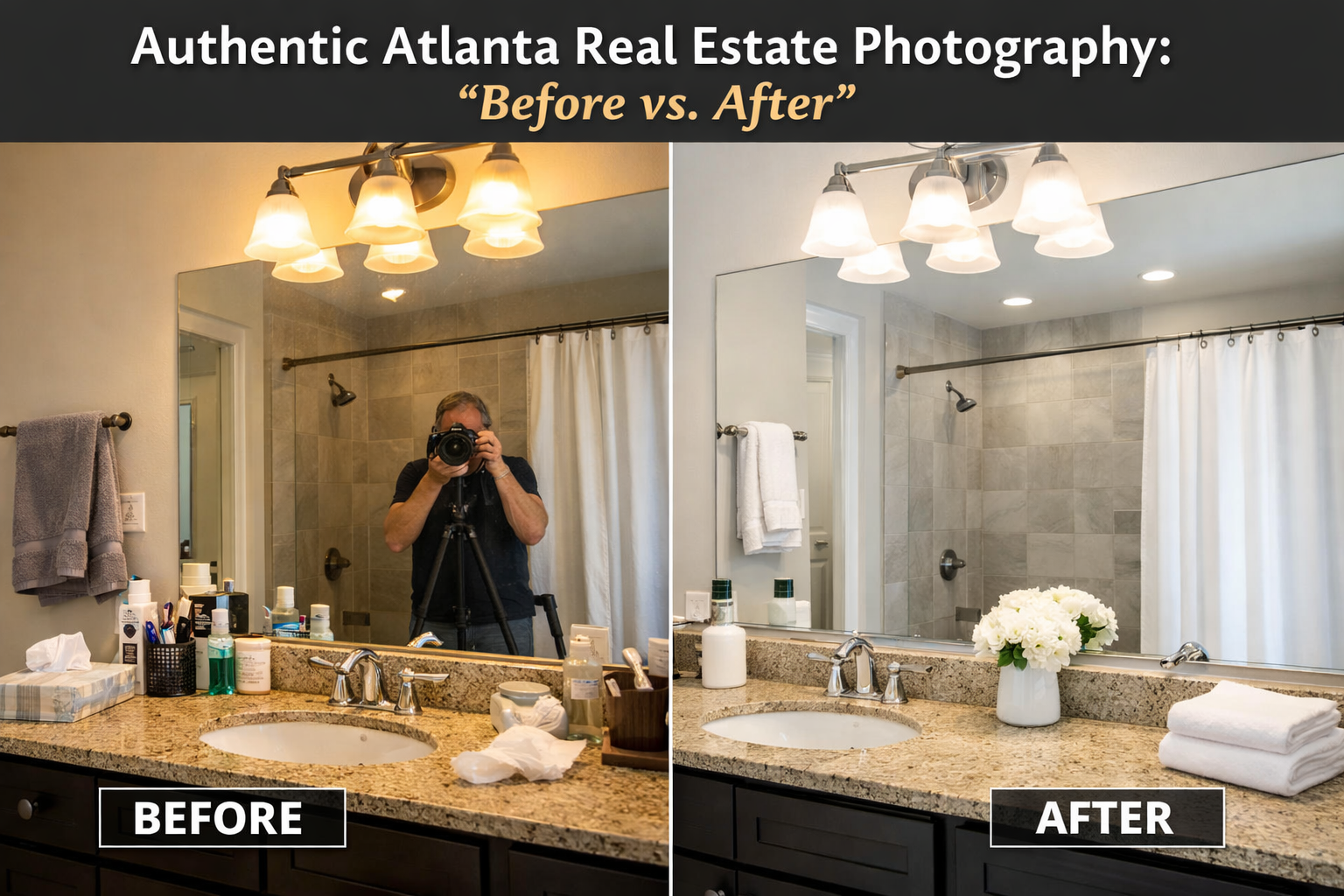
The Bathroom Truth Test: Authentic Atlanta Real Estate Photography That Buyers Trust
Stop over-edited listing photos. Learn the “Bathroom Truth Test” and the authenticity framework Atlanta buyers trust—editing, AI, and what converts.
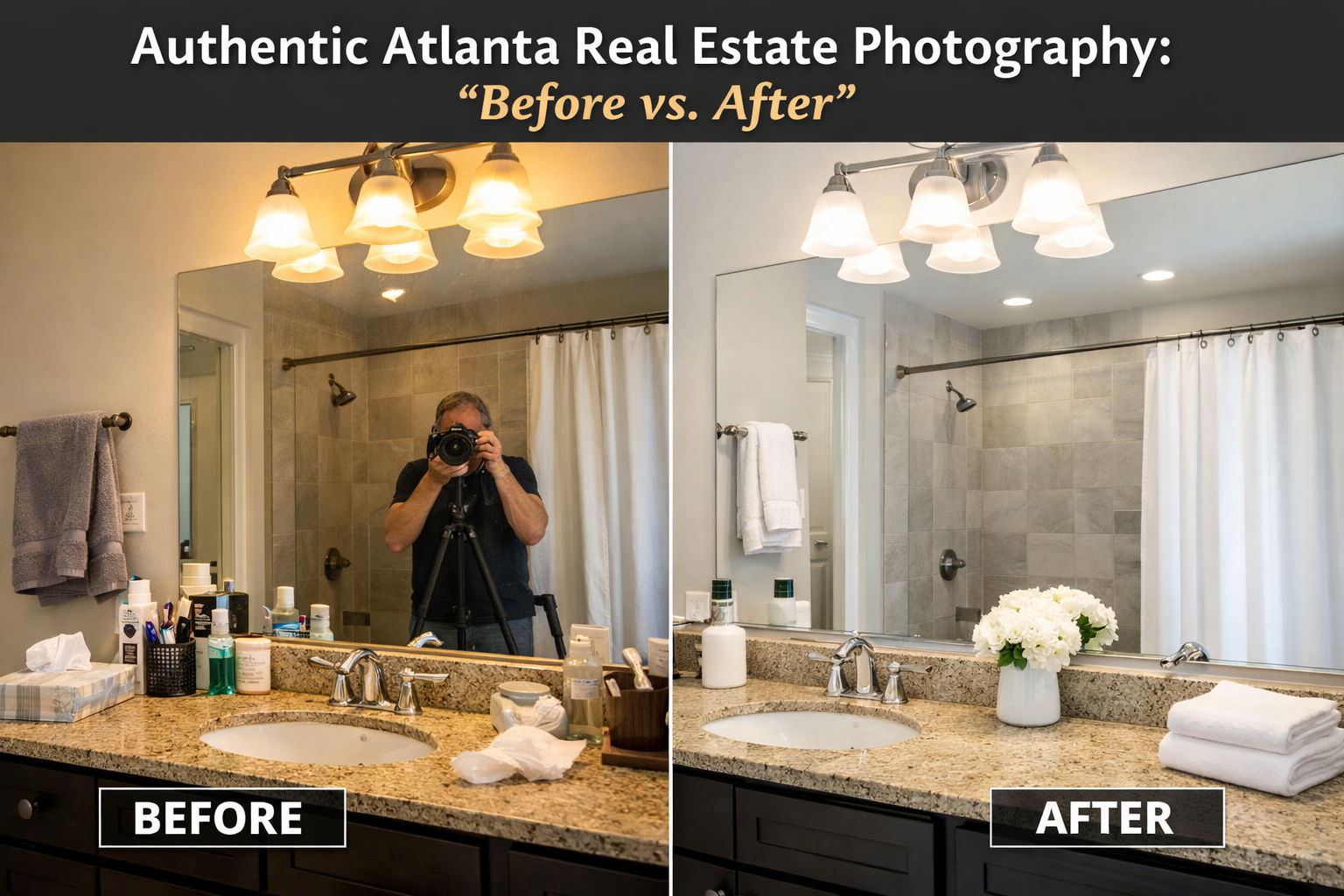
There’s one room that exposes a fake listing faster than any other.
Not the living room. Not the kitchen.
The bathroom.
Because buyers know what’s real in a bathroom:
mirrors don’t lie (unless you blur them)
tile doesn’t magically straighten itself
lighting doesn’t “feel luxury” if it’s actually yellow, dim, or inconsistent
So here’s the real question every Atlanta listing should answer:
Do your photos set expectations… or set traps?
This post is about authentic Atlanta real estate photography—the kind that builds trust, gets more qualified showings, and protects your reputation as an agent, builder, or host.
Why authenticity is the new luxury in Atlanta listings
Atlanta buyers are busy. Traffic is real. Decision fatigue is constant. People don’t want to “be sold.” They want to feel confident.
And confidence comes from alignment:
what they saw online
what they see at the showing
what the home actually is
When the photos are honest, buyers show up ready.
When the photos are exaggerated, buyers show up defensive.
Defensive buyers don’t offer strong. They nitpick. They stall. They renegotiate.
Authenticity isn’t a moral statement. It’s a performance strategy.
The trust gap: over-editing, AI, and “housefishing”
We’re in a new era: AI-enhanced images, overly smoothed textures, virtual staging that ignores reality, and edits that quietly remove “inconvenient” features.
The result is a trust gap. Buyers increasingly suspect listings are “catfishing” them—especially when:
window views look too perfect
rooms feel unnaturally stretched
textures look plastic
grass looks painted
lighting looks like a showroom… but the home isn’t
Authentic photography doesn’t mean “no editing.” It means truthful editing.
Truthful editing improves clarity without changing reality.
That’s the line. Cross it, and your listing becomes a liability.
The Bathroom Truth Test: how buyers decide if your listing is real
If you want to predict whether buyers will trust a listing, look at the bathroom photos and ask:
1) Do the vertical lines look real?
If the vanity or door frame is leaning, buyers feel “cheap,” even if the home isn’t.
2) Can the viewer understand the layout?
Bathrooms are small. If the photo is too wide, too distorted, or too cropped, buyers assume the room is hiding something.
3) Is the lighting honest?
Warm bulbs + daylight can create weird color casts. A pro fixes it—but not by turning the room into something it isn’t.
4) Does the mirror feel “clean” without being blurry?
Over-editing often creates a smeared, soft-focus mirror that screams manipulation.
5) Does the bathroom look like it would in real life on a good day?
That’s the sweet spot:
accurate size
accurate finishes
clean presentation
flattering but believable
If your bathroom passes this test, the rest of the home usually earns trust too.
The Authentic Edit Code: what’s “clean” vs what’s “fake”
Here’s the framework that keeps listing media premium and honest.
Edits that are usually safe (clarity upgrades)
These help buyers see the home accurately:
exposure correction (brighten shadows without nuking highlights)
color correction / white balance (make whites look white)
straightening and vertical correction (walls shouldn’t lean)
lens distortion correction (reduce wide-angle warp)
minor cleanup that’s temporary (dust spots, tiny scuffs)
Edits that usually cross the line (reality changes)
These change what a buyer will experience in person:
removing permanent damage (cracks, stains, water marks)
swapping finishes (countertops, floors, paint colors)
replacing views through windows
deleting nearby buildings, roads, power lines, or poles
stretching rooms to feel bigger than they are
AI “repairing” surfaces that are still flawed in real life
The rule:
If a reasonable buyer would feel surprised or misled at the showing, the edit wasn’t authentic.
Authenticity still needs “beauty” — here’s how pros do both
Authentic doesn’t mean dull.
The highest-converting listing photos do three things at once:
1) They respect the architecture
Clean lines. Accurate geometry. Strong compositions that show flow.
2) They show care
A home that looks cared for feels higher value—especially in kitchens and bathrooms.
3) They guide attention without deception
A great photographer doesn’t invent features. They reveal them.
In bathrooms, that means:
keeping counters clean and minimal
framing the vanity + mirror clearly
balancing lighting so tile and paint look accurate
showing enough context so the space makes sense
That’s how you get “luxury energy” without lying.
What authenticity does for your marketing (beyond the photos)
Authentic photography improves the entire funnel:
Higher-quality clicks
People who click because the photos are clear and believable are more likely to schedule.
Fewer wasted showings
You stop attracting the “this looked bigger online” crowd.
Better agent reputation
Agents talk. Buyers talk. A brand that delivers what it shows becomes the one people trust.
Better negotiation posture
When expectations match reality, the deal stays focused on value—not disappointment.
Authenticity protects your time, your deals, and your name.
How to spot authentic photography before you hire anyone
Most portfolios only show highlight shots. You want proof of consistency.
Ask for:
2–3 full galleries (not just best-of)
at least one bathroom-heavy set (because it’s the hardest room to “fake” well)
examples that include mixed lighting (daylight + bulbs)
examples of small bathrooms (townhomes/condos) that still look accurate
Quick red flags
everything looks “too smooth” (plastic textures)
every window is pure white (no detail)
wide-angle distortion everywhere
bathrooms that look unrealistically huge
zero examples of average homes (only luxury highlight reels)
Authenticity shows up in the “normal” homes. That’s where skill lives.
Authenticity is also an SEO advantage (yes, really)
If your goal is traffic, authenticity helps you rank because it aligns with what Google wants: helpful, reliable content created for humans—not algorithms.
Here’s how authentic media supports SEO:
original images = higher trust and better differentiation
real examples = longer time on page
clear explanations = higher usefulness
structured headings = better indexing
Do this on your site
Use descriptive filenames:
atlanta-real-estate-photography-bathroom-vanity.jpgUse accurate alt text: “Authentic bathroom listing photo with clean vanity and balanced lighting in Atlanta home”
Add a short caption occasionally to reinforce context: “Example: accurate color + straight lines, no distortion”
That’s clean SEO. No keyword stuffing. No gimmicks.
Final takeaway: The bathroom tells the truth
In Atlanta, buyers decide quickly.
But they decide more strongly when they trust what they’re seeing.
If your listing photos:
pass the Bathroom Truth Test
keep edits truthful
present the home cleanly and accurately
You don’t just get more showings — you get better showings.
If you’re building a brand around trust, authenticity isn’t optional.
It’s the edge.
Brique Listing Media delivers modern listing photos that look premium and honest — for agents, homeowners, builders, and hosts across Atlanta and Georgia.
Next steps: