
Stop Overpaying for Listing Media: The Only “Photos vs Video vs 3D Tour” Decision Framework Atlanta Agents Need
Atlanta agents: use this no-fluff framework to choose the right listing media stack—photos, walkthrough video, 3D tour, floor plan, drone—based on listing type, buyer behavior, and real engagement data.

Make it stand out
Whatever it is, the way you tell your story online can make all the difference.
Introduction: most agents don’t have a media problem — they have a selection problem
Atlanta is competitive and visual. You already know that. What most agents don’t know is this: the wrong media add-ons can look “premium” while producing zero meaningful lift in saves, shares, showings, or offers.
So this post is a practical framework—built around what buyers engage with and how listings actually get consumed online—so you can choose the right stack per listing, not per habit.
1) The baseline: pro photos are the price of entry
If you skip professional photos, everything else becomes lipstick on a power outage.
Photos still rank as the most useful feature for buyers on an agent’s website, per National Association of Realtors (NAR) (National Association of Realtors) reporting (their 2024 Profile reference is widely cited at 96%).
Bottom line: photos aren’t a “marketing upgrade.” They’re the minimum viable product.
Use photos when:
Always. (Yes, even for “quick” listings.)
2) Walkthrough video: the vibe filter (and time-saver)
Walkthrough video works best when the buyer needs to feel:
flow between spaces
ceiling height and proportions
“does this home feel like the photos?” confidence
NAR’s home staging reporting shows agents say videos matter to clients (not as much as photos, but enough to move the needle).
Walkthrough video is worth it when:
the layout is a selling point (open concept, finished basement, indoor/outdoor flow)
you expect relocation or out-of-market buyers
you’re running social content and want listing-level video without extra production
Video is usually a waste when:
the home is highly dated and you’re selling “price + location” only
the listing will sell instantly regardless (rare, but it happens)
3) 3D tour + interactive floor plan: the “serious buyer” accelerator
If your listing has layout complexity—or you want remote buyers to self-qualify—this is your best add-on.
Zillow reports that listings with a Zillow 3D Home tour received 43% more views and 55% more saves than listings without, based on Zillow site data (Nov 2021–Jan 2022).
Zillow also reports interactive floor plans driving stronger outcomes, including:
79% more saves (and additional lifts in views/shares) in their cited data window.
3D + interactive floor plan is worth it when:
the layout needs explanation (split-levels, additions, multi-story, ADU (Accessory Dwelling Unit) situations)
buyers are likely remote (investors, relocations, rentals)
you want fewer “tourists” and more qualified showings
4) Floor plans: the underrated clarity weapon
Floor plans reduce friction for buyers who think in layout, not vibes.
And they help answer the question buyers won’t ask out loud until they’re annoyed:
“Where is the bedroom relative to the kitchen and living room?”
When buyers can “mentally walk” the home, they’re more likely to show up ready—less wandering, less confusion, fewer wasted appointments.
5) Drone/aerial: only when geography is part of the pitch
Drone isn’t “luxury.” It’s context.
Drone is worth it when:
lot size, privacy, topography, or frontage matters
proximity sells (parks, BeltLine access, skyline, water, new development)
it’s a property where the exterior story is as important as the interior
Drone is usually a waste when:
the home is a standard in-town lot with no meaningful aerial story
you’re doing it “because competitors do it”
Also: commercial drone work is generally governed by Federal Aviation Administration (FAA) (Federal Aviation Administration) Part 107 rules.
6) The Atlanta Listing Media Stack Matrix (use this to choose fast)
Atlanta Listing Media Stack Matrix
Filter by listing type, search by keyword, and sort columns to pick the right media stack fast. This is built to be genuinely useful (not “thin content”).
| Entry-level / investor flip | Photos | Floor plan | 3D tour (if layout odd) | Drone, heavy video |
| Family home (most Atlanta resales) | Photos | Walkthrough video | 3D tour (if multi-level) | Drone (unless lot/location) |
| Luxury / design-forward | Photos | Video + 3D + floor plan | Drone | — |
| New build / builder inventory | Photos | 3D + floor plan | Drone | Skipping floor plan |
| Rental / STR (Short-Term Rental) | Photos | 3D tour | Video | Drone |
If you want to rank this harder: add a short paragraph under each row explaining the “why” (buyer behavior + layout clarity), and internally link to your service pages (photos / video / 3D / floor plans).
7) Deployment plan (so the assets actually perform)
Most “media doesn’t work” complaints are really distribution failures.
Where each asset should live:
Photos: MLS (Multiple Listing Service) + syndication platforms + agent site
Video: social channels + listing page + send to buyer agents via text/email
3D tour link: MLS remarks/virtual tour field so it syndicates (Zillow explicitly notes MLS syndication behavior when the link is included).
Floor plan: MLS attachment/media slot + listing page download
Minimum deployment checklist:
Put the 3D link in the correct MLS field (not buried in remarks)
Use vertical cuts for social (Reels/Shorts) and a clean horizontal version for the listing page
Make the first 3 photos ruthless: hero exterior, best living space, best kitchen angle
Conclusion: pick the stack that matches the buyer, not your mood
If you want the simplest rule that works most of the time in Atlanta:
Photos = mandatory
Video = helps buyers feel the home
3D + interactive floor plan = helps buyers understand the home (and self-qualify)
Drone = only when location/land is part of the value
When you choose the stack correctly, you get more of what matters: saves, shares, qualified showings, and cleaner offer behavior—without random spend.
Why Atlanta Listings With “Good Enough” Photos Sit — And How Smart Agents Fix It Fast
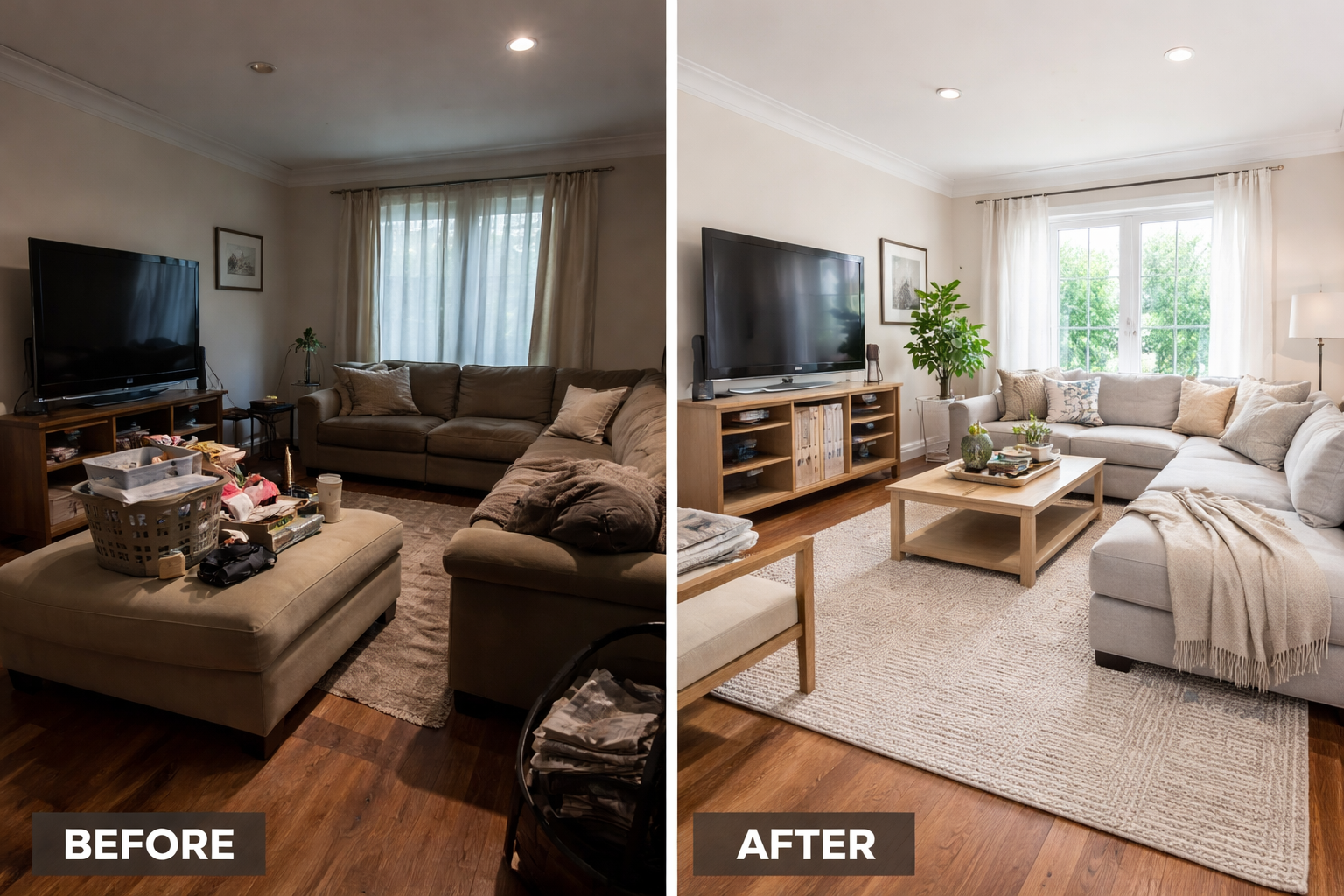
Most Atlanta listings don’t stall because of price — they stall because buyers never click. This breakdown shows how professional real estate photography directly increases clicks, showings, and final sale price — and why “good enough” photos quietly cost agents real money on every listing.
Introduction
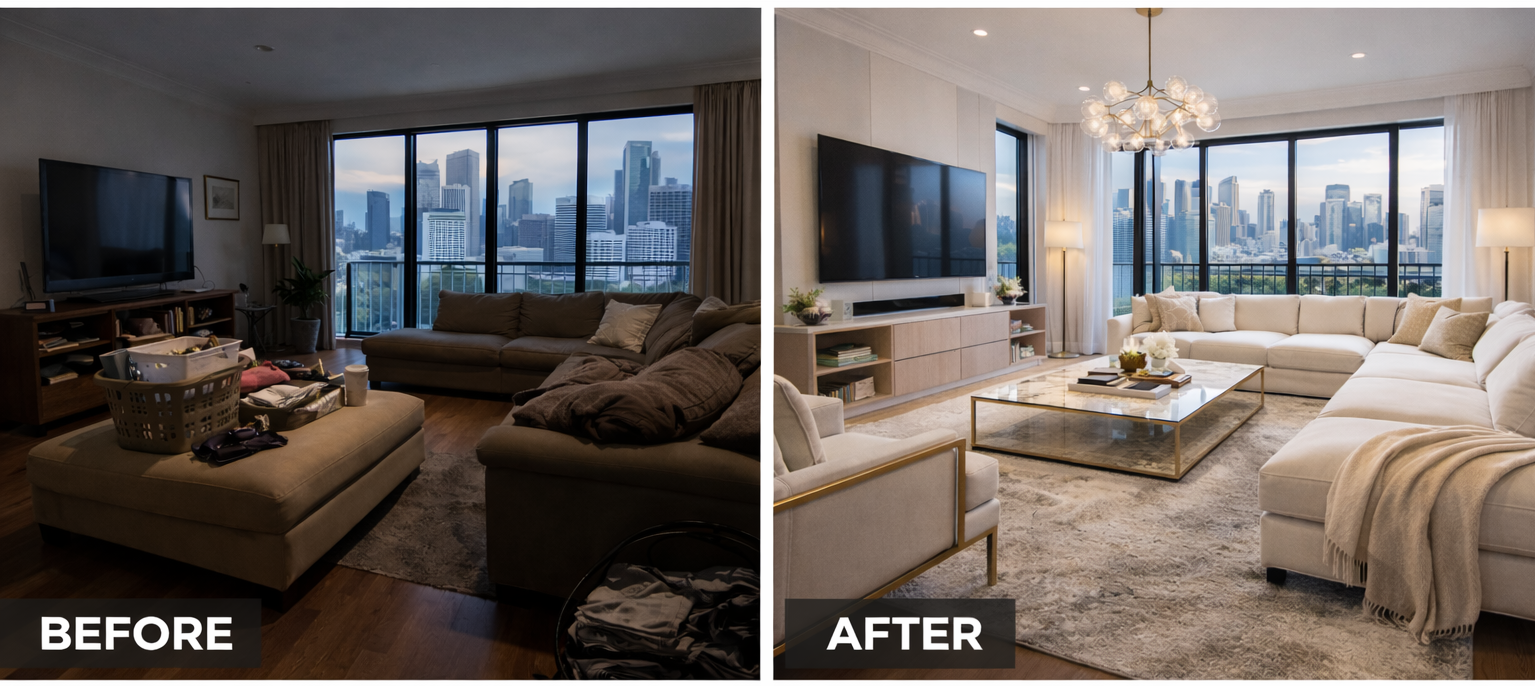
Why most listings don’t fail on price — they fail on presentation.
In the Atlanta metro market, most listings don’t lose because they’re overpriced. They lose because buyers never emotionally connect. And emotion starts with visuals.
Before a buyer ever reads square footage, school zones, HOA rules, showing instructions, or listing remarks, they see the property. That first impression determines whether anything else even gets a chance.
Modern buyers are not comparing your listing to the one next door — they’re comparing it to everything they’ve seen all day. That includes listings outside the neighborhood, outside the zip code, and outside your price band. Visual quality becomes the filter.
Buyers scroll fast. Algorithms reward engagement. “Good enough” photography doesn’t offend — it disappears. And when a listing disappears digitally, it dies quietly on the market, often without the agent ever realizing why.
This is not a stylistic preference. It’s how modern real estate platforms are engineered to behave.
1. The Scroll-Stop Rule (First 3 Seconds Matter)
How buyers behave on Zillow, Redfin, and Realtor.
Across major real estate portals, most buyers decide whether to click a listing in under 3 seconds.
That decision isn’t logical — it’s emotional and visual. The buyer’s brain is asking one simple question:
“Does this feel worth my time?”
And that answer is driven almost entirely by what they see in the first image or two.
The strongest scroll-stopping images share common traits:
Bright, even lighting that feels natural
A sense of openness and breathing room
Clean vertical lines that make rooms feel stable
A hero photo that looks intentional, not accidental
If your first image looks like every other phone-shot living room, the algorithm learns something fast: people aren’t clicking.
Less clicks lead to lower engagement scores. Lower engagement means your listing is shown less often in search results and recommendation feeds. This process is automated, silent, and unforgiving.
Less clicks = less visibility.
2. “Good Enough” Is the New Invisible
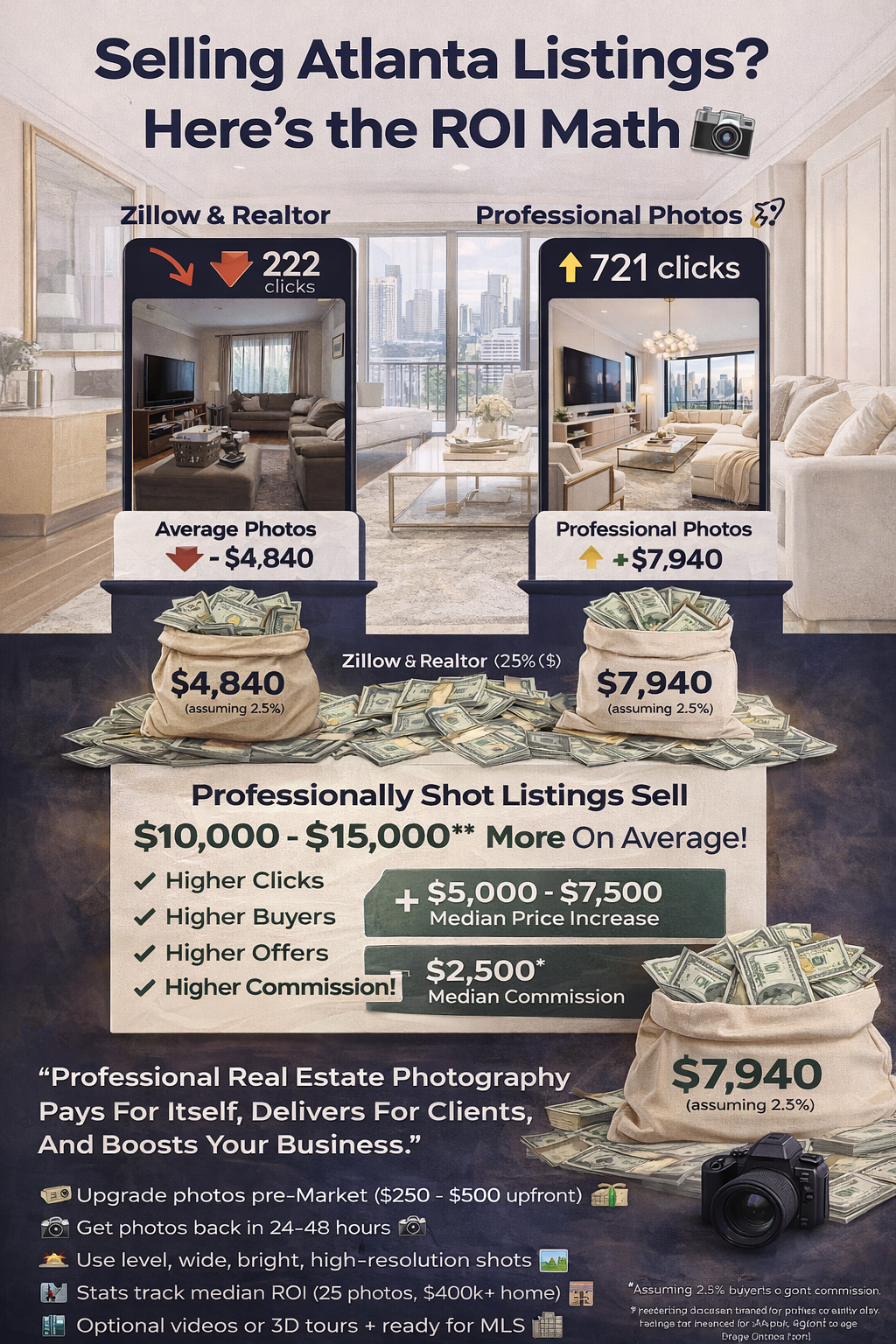
Why average photos are algorithm poison.
Most agents don’t use bad photos. Bad photos are obvious. They’re easy to spot and easy to correct.
The real problem is average photography — images that technically show the home but fail to create curiosity or emotional pull.
Average photos commonly:
Are slightly underexposed or unevenly lit
Have tilted verticals that feel subtly uncomfortable
Compress rooms so they feel smaller than reality
Fail to show how spaces connect and flow together
To a buyer, this quietly signals doubt:
“There’s probably something wrong with this house.”
Not because anything is visible — but because nothing stands out.
No red flags. No green flags either. Just indifference. And indifference is deadly in a competitive market like Atlanta.
Indifference leads to fewer saves, fewer shares, and fewer showings. The listing doesn’t get rejected outright — it gets ignored until price reductions become the only remaining lever.
3. What High-Performing Atlanta Agents Do Differently
Patterns consistently seen across top-performing listings.
Across Atlanta’s fastest-moving listings — from intown condos to suburban single-family homes — the same behaviors show up again and again.
High-performing agents:
Schedule photography immediately after staging or final prep
Use professional photography on every listing, not just luxury inventory
Add video or 3D tours selectively, based on property type
Treat speed of delivery as a competitive advantage, not a bonus
These agents understand a truth many overlook:
Marketing delay = buyer doubt.
When a listing sits live with placeholder images or weak visuals, buyers assume hesitation, hidden issues, or lack of demand. Fast, polished media communicates confidence — even before the first showing.
They also tend to be consistent about presentation across their inventory. Consistency matters because buyers learn your “signature.” When your listings look professional every time, you build trust at scale.
4. The Psychology of Light, Space, and Angles
Why wide, bright, and level photos convert better.
Professional real estate photography isn’t about expensive cameras. It’s about understanding how the human brain interprets images subconsciously.
Strong listing photos consistently share these characteristics:
Wide angles that feel natural and proportional
Straight vertical lines that suggest structural integrity
Balanced interior and window light that feels clean
Consistent color tones that feel intentional and controlled
These elements work together to build trust.
Buyers may not consciously analyze lighting ratios or lens choices, but they feel when an image is calm, balanced, and credible. When photos feel intentional, buyers assume the home has been well maintained.
A few subtle psychology cues at play:
Brightness reads as safety and cleanliness.
Straight lines read as stability (nothing “off”).
Cohesive color reads as quality control.
Flow photos reduce uncertainty and make the layout feel “obvious.”
5. Faster Media = Faster Offers
Speed as a competitive advantage in the Atlanta metro.
Atlanta is active, but buyer attention is limited. The listings that win are the ones that capitalize on early momentum.
Listings that:
Go live within 48–72 hours of media capture
Launch with cohesive, professional visuals
Appear complete and polished across MLS and major portals
Consistently experience:
Higher first-week save rates
Increased showing requests
Better-quality offers earlier in the listing lifecycle
Delay kills curiosity. Speed compounds interest — especially in the first seven days.
When you launch fast with great visuals, you create a strong “first-week signal” (more clicks, saves, and shares). That early signal often becomes a self-reinforcing loop: more engagement leads to more exposure, which leads to more engagement.
6. The ROI Math (Photos vs. Days on Market)
Why professional photos are leverage, not an expense.
ItemCostImpactProfessional PhotosLow, one-timeHigher click-through ratesFaster Time on Market$0Reduced holding and opportunity costsStrong First ImpressionPricelessBetter negotiation leverage
Photography is one of the few listing expenses that influences every downstream outcome — from online visibility to buyer confidence at the offer table.
This isn’t about aesthetics. It’s risk management.
A simple way to think about it:
Better visuals increase the number of serious buyers who show up.
More serious buyers creates competition.
Competition protects price.
Even when the home is priced correctly, weak presentation forces you to “buy attention” using reductions. Strong presentation often prevents that.
7. Why Buyers Trust Listings That Look Professional
Visual consistency builds credibility.
Buyers are trained — subconsciously — to associate clean, well-composed images with professionalism. When a listing looks polished, buyers assume the agent is organized, responsive, and detail-oriented.
Poor visuals do the opposite. They introduce doubt before the first showing is ever scheduled, forcing the price to do the work that presentation should have handled.
Trust begins online, long before the door opens.
And trust is not just about the house — it’s about the transaction. Buyers are more willing to schedule a showing when they feel the listing is “managed well.”
8. What “Professional” Actually Means (So You Can Spot It)
A clear, practical definition.
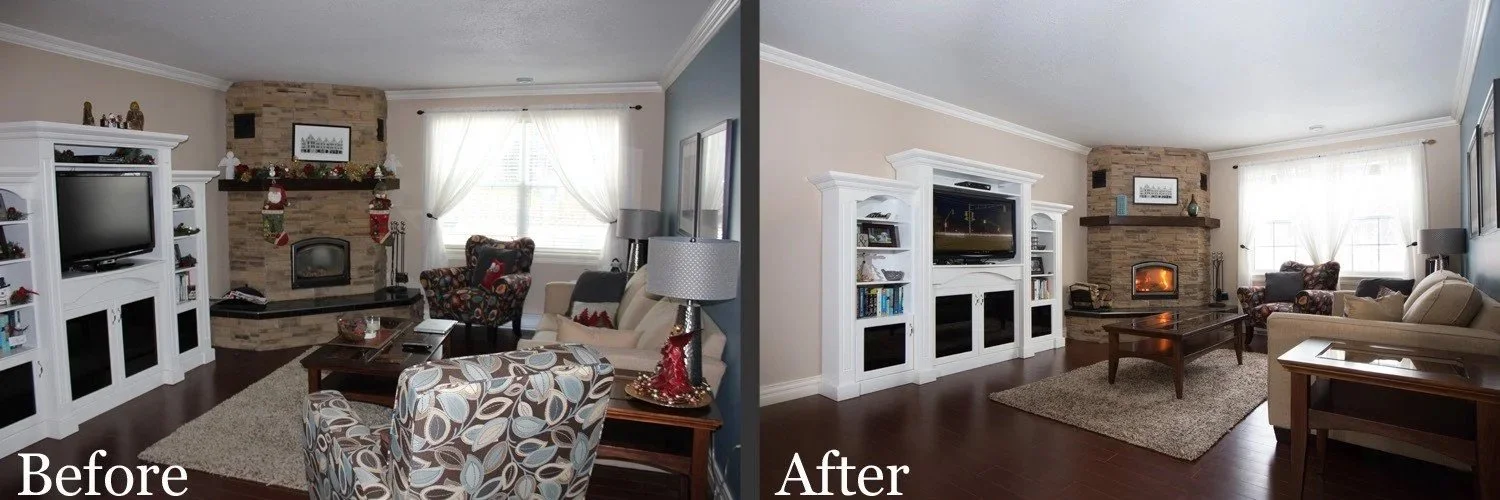
Professional listing media isn’t about being flashy. It’s about being accurate, clean, and consistent.
Here’s a practical checklist agents can use:
Straight verticals (door frames and cabinets don’t lean)
Even exposure (no dark corners, no blown-out windows)
Correct color balance (walls look like the actual wall color)
Full room context (buyer understands the space without guessing)
Coverage consistency (every key room has a “hero” angle)
Exterior clarity (clean front elevation + yard context)
If any one of those is missing, a buyer may not be able to say what’s wrong — but their brain feels it.
9. The “Must-Have” Shot List Buyers Expect
Because missing shots cost showings.
Buyers have a mental script for what they expect to see. When the script is broken, they assume the property is hiding something.
Here’s a buyer-friendly baseline shot list:
Exterior
Front elevation (clean, centered)
Angle showing driveway/entry
Backyard or outdoor space (even small)
Any major feature: pool, deck, patio, view
Interior
Main living area (wide, inviting)
Kitchen: wide + a second angle
Dining area (or showing where it fits)
Primary bedroom + primary bathroom
Secondary bedrooms (at least one angle each)
Secondary bathroom(s)
Laundry area (if notable)
Bonus: office nook, basement, garage if relevant
Flow shots (optional but high impact)
A hallway/transition shot that makes the layout feel easy
This isn’t about “more photos.” It’s about complete information.
10. Atlanta-Specific Reality: Your Listing Is Competing With New Builds
A local factor agents underestimate.
In metro Atlanta, buyers constantly see new construction and near-new renovations — even if your listing isn’t directly competing in the same neighborhood.
That changes buyer expectations.
A resale home can still win, but it needs to:
Look bright and clean in photos
Feel spacious and easy to understand
Highlight updated features clearly
When photos are dim or inconsistent, buyers mentally categorize the property as “work needed,” even if the home is move-in ready.
Your visuals are doing that classification work before you get to explain anything.
11. When Video and 3D Tours Matter (And When They Don’t)
Add media strategically.
Not every listing needs every add-on. The goal is to reduce buyer uncertainty with the right tool.
Video walkthroughs help most when:
The layout is a major selling point
The home is larger or has multiple levels
The listing targets out-of-town buyers
3D tours help most when:
The property is unique or hard to “understand” from photos
Buyers may want to measure or plan furniture
You want fewer low-quality showings (buyers self-qualify)
Photos remain the primary driver of clicks. Video and 3D support conversion after the click.
12. A Simple Prep Plan That Protects the Shoot
Because the best photographer can’t fix chaos.
Professional photos don’t require perfection — they require clarity.
A quick, realistic prep plan:
Turn on all lights (bulbs matching temperature if possible)
Clear counters and sinks (kitchen + baths)
Remove floor clutter (cords, laundry baskets, pet items)
Make beds and smooth linens
Open blinds where appropriate (unless view is poor)
Hide toiletries and trash cans
You don’t need a magazine set. You need a space that reads as clean and livable.
13. The Most Common Mistakes That Make Great Homes Look Cheap
Avoid these and your conversion improves immediately.
Common listing-photo mistakes that cost clicks:
Shooting too low (rooms feel distorted)
Crooked horizons/verticals (feels sloppy)
Over-widening (makes buyers feel tricked)
Mixed lighting without correction (yellow/blue chaos)
Skipping a key room (buyer assumes the worst)
Dark exteriors (home looks tired)
The goal is honest and flattering — not deceptive.
FAQ
Do professional photos matter for lower-priced listings?
Yes. Lower-priced listings often attract more online traffic. Strong photos help you win attention and filter serious buyers.
How many photos is ideal?
Enough to cover the home completely without repetition. Most buyers care more about coverage and clarity than raw count.
Can a phone camera be “good enough”?
Sometimes, in perfect lighting with strong technique. But consistency is the issue. Professional work is repeatable across conditions and rooms.
What’s the biggest single upgrade an agent can make?
A strong hero image plus consistent brightness and straight lines across the set. That combination improves clicks and trust.
Conclusion: Win Before the Showing
How smart agents win without lowering price.
By the time a buyer walks through the door, the decision is already half-made.
Photos don’t just show the home. They:
Filter out tire-kickers
Attract serious, motivated buyers
Support pricing confidence and negotiation strength
Smart agents don’t ask if visuals matter.
They ask how fast they can deploy them — and they act accordingly.